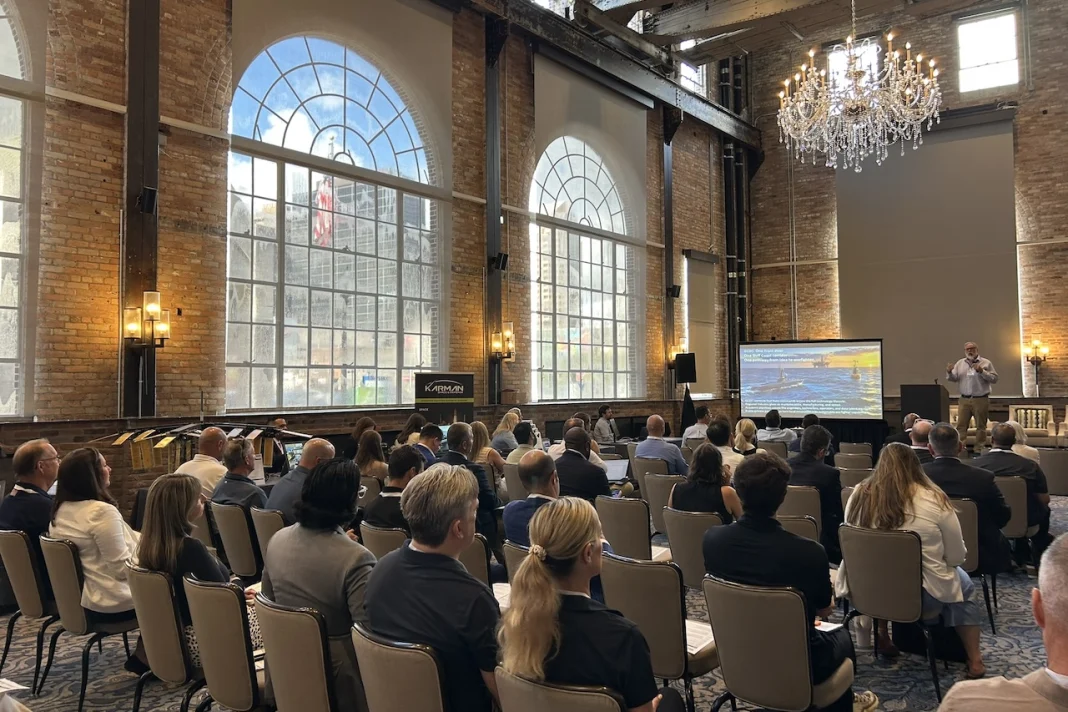
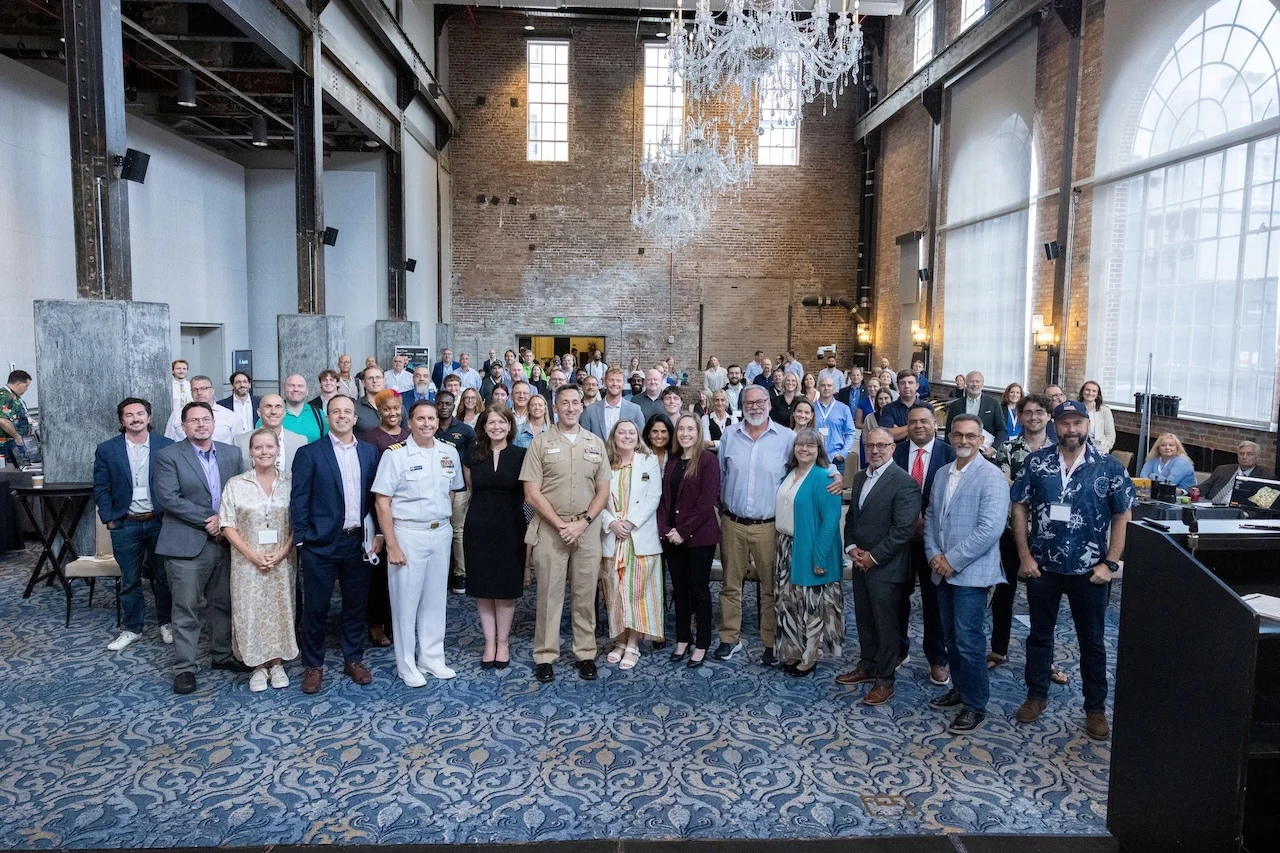
NEW ORLEANS – Nearly 100 businesses gathered with U.S. Navy and other federal officials in New Orleans on Sept. 2 for the Gulf Coast Innovation Industry Day, an event organized through the newly launched Gulf Coast Defense Catalyst (GCDC) partnership to connect companies with specific military technology needs.
Participation was strong, drawing 150 confirmed attendees, plus approximately 15 walk-ins, and representatives from 96 businesses to the NOPSI Hotel. Twenty exhibitors participated. Representatives attended from Naval Information Warfare Center Atlantic, Naval Surface Warfare Center Panama City Division, Commander, Naval Meteorology and Oceanography Command, the U.S. Naval Research Laboratory and other government organizations.
Defense Partnership Moves Into Action
GCDC was formed by Naval Information Warfare Center (NIWC) Atlantic, Commander, Naval Meteorology and Oceanography Command (CNMOC), Naval Surface Warfare Center (NSWC) Panama City Division and the U.S. Naval Research Laboratory (NRL) to strengthen the defense innovation ecosystem across the Gulf Coast. The partnership is designed to connect military technology needs with businesses, startups and universities positioned to develop solutions.
The Greater New Orleans Development Foundation serves as GCDC’s Partnership Intermediary, with the GNO, Inc. team coordinating collaboration among the participating military commands and private-sector and academic partners.
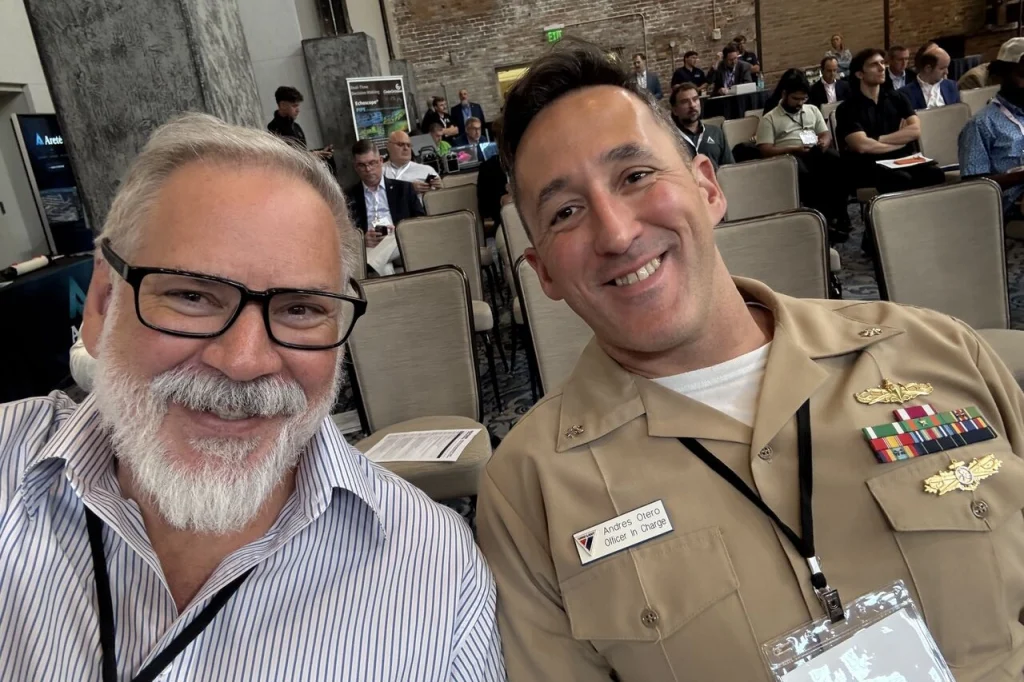
The Gulf Coast’s potential role in defense innovation was a central theme of the Industry Day, including an opening plenary by Dr. Jason McKenna, chief technology officer of CNMOC. When GCDC launched in June, McKenna described the need for collaboration among the Navy, industry and academia.
“As an operational command, we’re excited to be part of the GCDC. We absolutely need the best and brightest minds across the Navy, industry and academia working alongside us solving our battlespace sensing and prediction challenges,” said McKenna. “Adding NIWC Atlantic and GNODF to our existing ecosystem will help us deliver solutions at the speed of war.”
The program also connected defense innovation to Louisiana’s legacy industries, with remarks from Michael Hecht, president and CEO of Greater New Orleans, Inc., and Josh Fleig, chief innovation officer of Louisiana Innovation. Grady Fitzpatrick, chief business development officer of GNO, Inc., and Rebecca Conwell, president and CEO of the LSU New Orleans Research & Technology Foundation, addressed the GCDC partnership.
Focus on Maritime Sensing
The Industry Day put GCDC’s model into practice around a specific Navy technology challenge: seabed-to-surface maritime sensing, exploring how technologies can detect, collect and relay information from beneath the ocean to military operators at the surface.
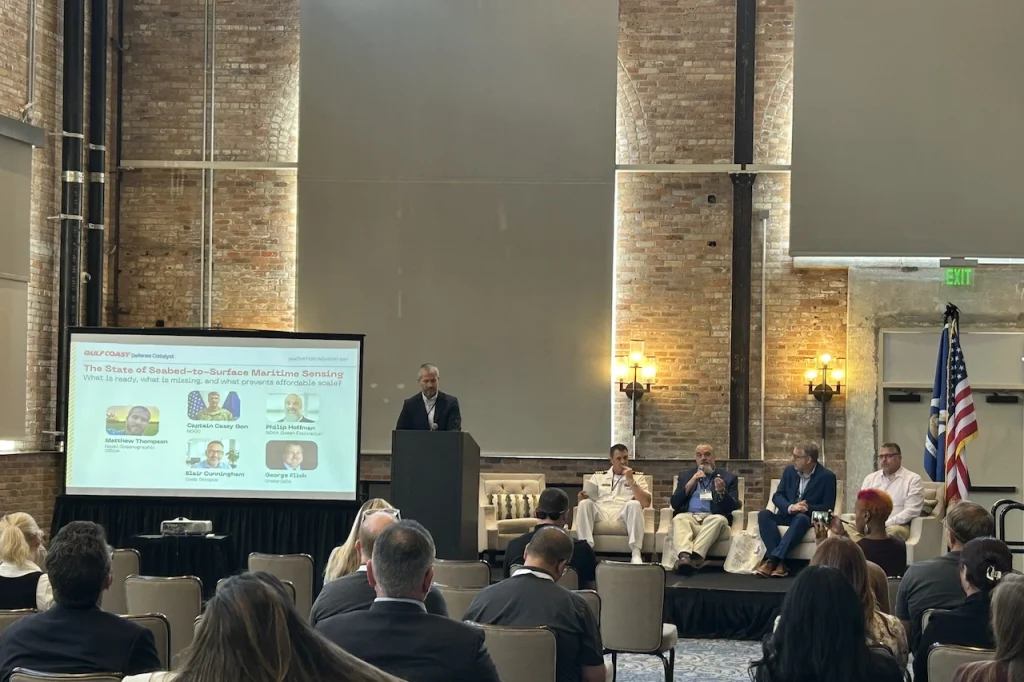
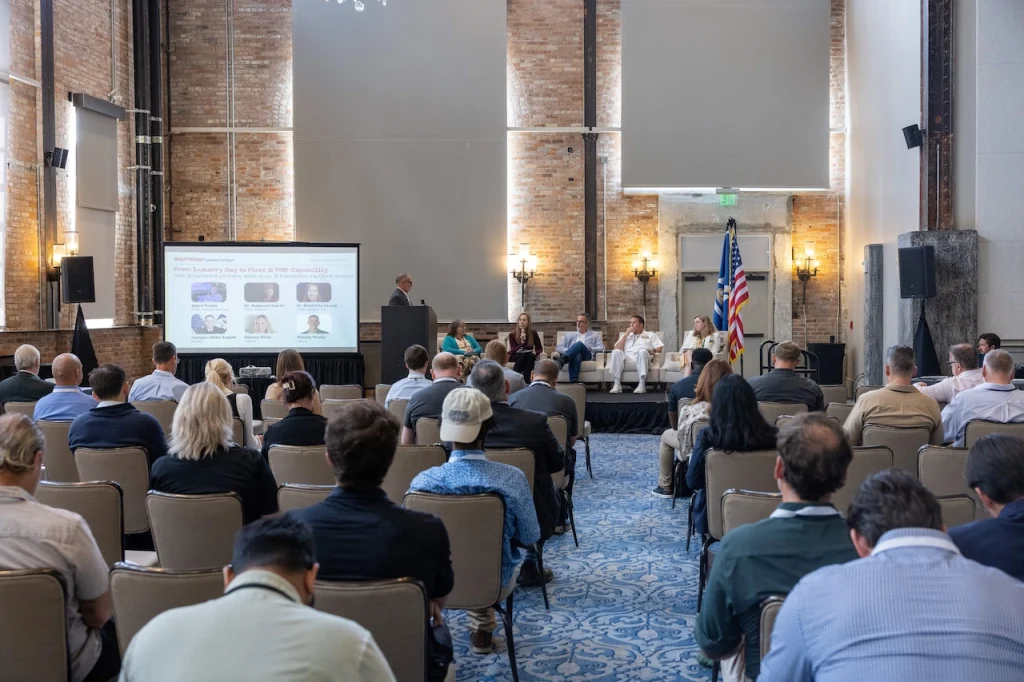
Among the central questions were which maritime sensing technologies are ready for use, what capabilities remain missing and what barriers stand in the way of affordable deployment at scale. Participants included Capt. Casey Gon, commanding officer of Naval Oceanography Operations Command; Philip Hoffman, technology portfolio lead and uncrewed maritime systems R&D coordinator for NOAA Ocean Exploration; Blair Cunningham, divisional CEO of CodaOctopus; and George Flick, chief growth officer of Unseenlabs.
The Gulf Coast’s geography is one of the reasons GCDC leaders have identified the region as a potential testing ground for maritime technologies. Dr. Blake Landry, a civil engineer with NRL’s Ocean Sciences Division, previously described the region’s physical and geographic characteristics as an advantage.
“The physical and geographic advantages of the Gulf Coast make it a unique testbed for maritime, oceanographic and surface warfare technologies,” Landry said. “By aligning our research and development efforts across commands, we are maximizing our collective regional strength to solve the Navy’s most complex challenges seamlessly and rapidly.”
The discussion also addressed how promising technologies move from development into operational use, including how government works with companies to test, purchase and transition maritime sensors into capabilities for the Navy.
Panelists included Dr. Suzanne Huerth, chief technology officer of NIWC Atlantic; Capt. Mike Svatek, assistant chief of staff for requirements and future capabilities at CNMOC; Sidney Dills of CNMOC’s Office of Research and Technology Applications; Stacey Rhody, a technologist with Leidos; and Dr. Michelle Kincer, chief technology officer of NSWC Panama City Division.
Businesses Connect With Defense Leaders
The private-sector technologies represented at the event came from companies including Integer, Quartermaster AI, Orpheus Ocean, Benthic Spectral Inc., Active Solutions LLC, Golden Hour Technologies Inc. and Geaux River Corporation.
Companies also had opportunities for direct conversations with government technical, testing and teaming representatives through a curated speed-networking session.
Government participation extended beyond the four Navy commands that established GCDC. Representatives attended from Navy Supervisor of Shipbuilding Gulf Coast, NOAA, the Naval Oceanographic Office, Naval Oceanography Operations Command, Marine Forces Reserve and Louisiana Economic Development/Louisiana Innovation, in addition to representatives of NIWC Atlantic, NSWC Panama City, CNMOC and NRL.
When GCDC launched in June, organizers said the partnership would develop initiatives including industry convenings, technology pitch events, targeted collaborative research projects, STEM education programs and community outreach. The Sept. 2 Industry Day marked an early step in carrying out those plans.