Later this year, if everything goes as planned, a humanoid robot will walk onto the shop floor of SSE Steel Fabrication’s 14-acre campus in Lower St. Bernard and begin learning to weld.
When it does, it will mark the first time a humanoid robot that was purpose-built for industrial fabrication has ever been tested inside a live, operating facility.
It’s a colossal step into the future for a local woman and minority-owned small business that started with a simple email.
Justin Airhart — chief operating officer and husband of CEO Mindy Airhart — was watching the news one day when an advertisement caught his eye. A Houston startup was building a humanoid robot for heavy industry.
It seemed credible enough, so he sent an email to the company. To his surprise, they wrote back. That unplanned exchange is how SSE Steel Fabrication, a family-owned steel fabrication company that Mindy Airhart’s parents, Marc and Cheryl Nuñez, founded in 1996 as Southern Services & Equipment, ended up at the center of a closely watched robotics pilot.
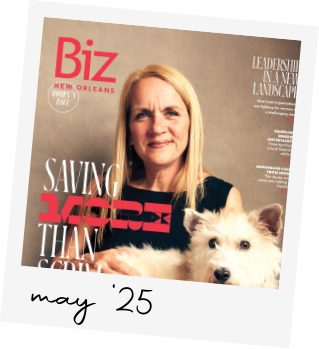
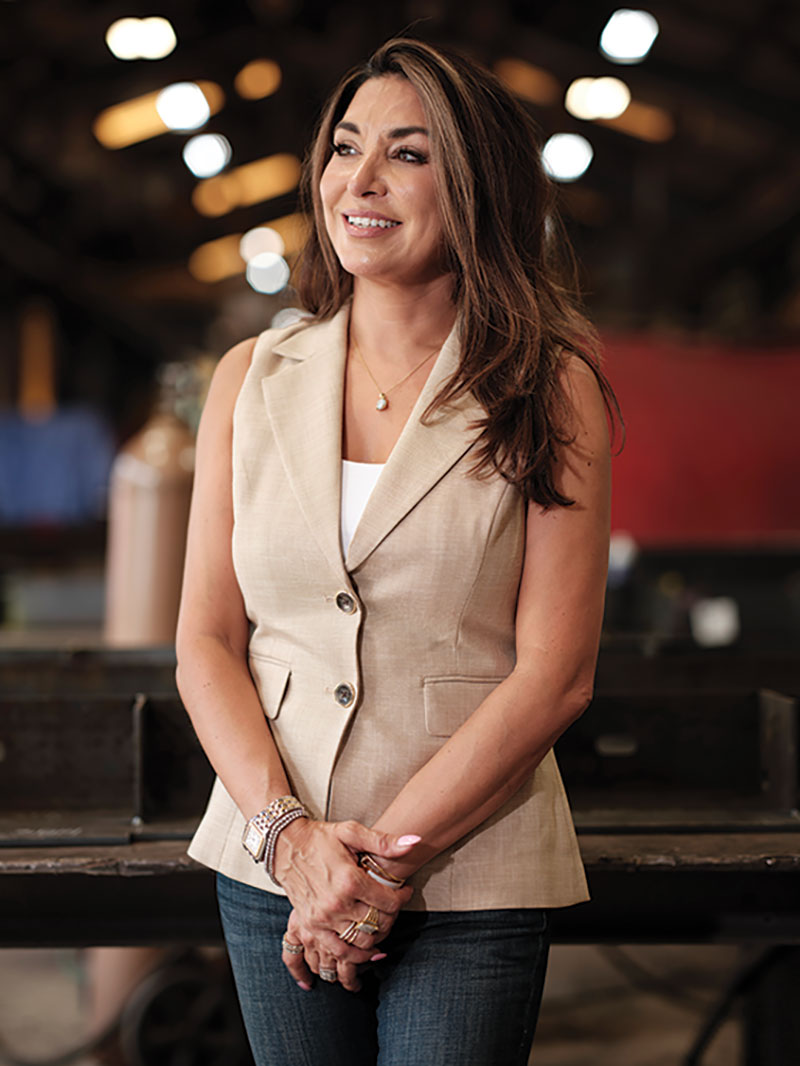
Mindy Núñez Airhart took ownership of the company in 2018, becoming the second generation to lead the firm her parents established. Today, SSE operates generates roughly $30 million in annual revenue and employs around 75 people.
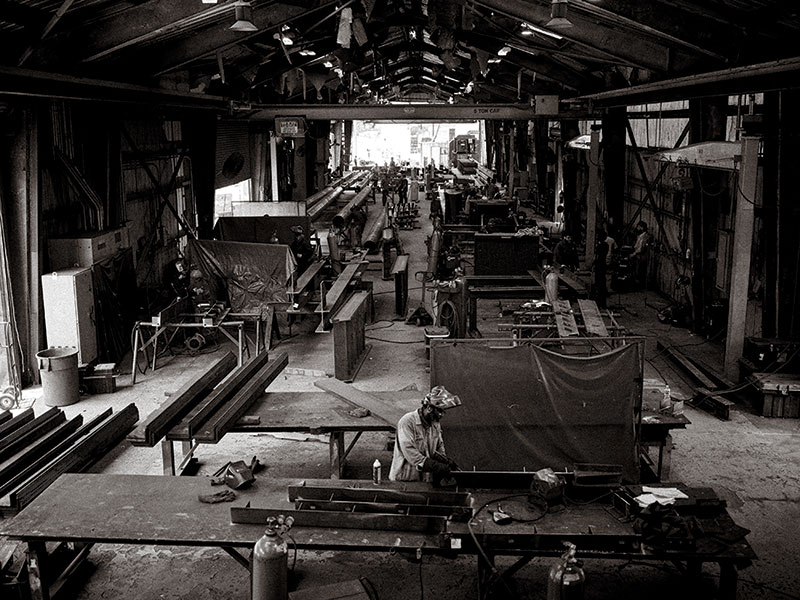
The company’s work is, by nature, one-of-a-kind. It manufactures bespoke structural steel for commercial, industrial and municipal clients across the country.
“Our output is constantly changing,” Mindy Airhart said. “Every project we do is different.”
So is the floor where that production happens. Which, it turns out, is exactly what makes SSE the right place to build the future.
The Next Step
SSE’s willingness to bet on a walking, welding robot didn’t come from nowhere. It came from nearly a decade of smaller bets that kept paying off.
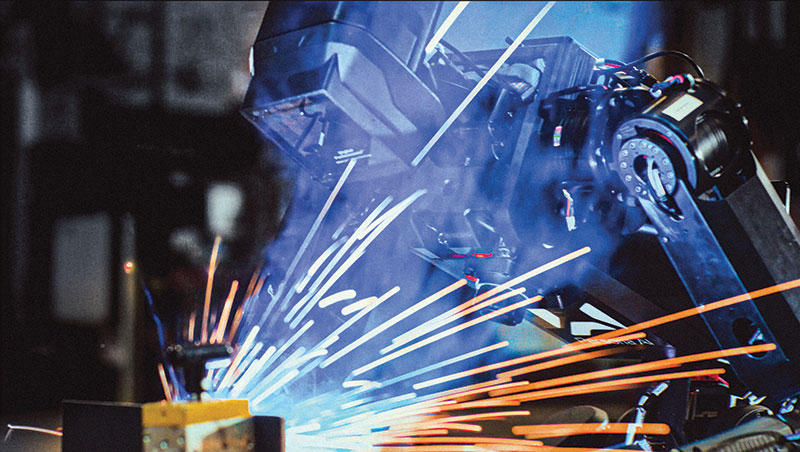
In 2016, the company purchased its first piece of automated equipment: a six-axis robotic beam line — an articulated arm that cuts steel and shapes beams to exact specifications.
When Mindy Airhart announced the acquisition on Facebook, however, the comments weren’t congratulatory. Instead, she saw widespread concern that her purchase would result in lost jobs.
What happened, Airhart noted, was the opposite. The productivity gains from that first robot gave SSE more capacity, and more capacity meant more work.
The company added a second shift, then a third. Revenue grew, and so did hirings.
“Every time we’ve added any piece of automated equipment, there’s been a concern by our employees that maybe it will take jobs,” she said. “But every time it’s only added jobs.”
SSE replaced that original beam line four years later with a newer model and has since added four more pieces of automated equipment, including a fleet of welding collaborative robots, or ‘cobots,’ and augmented reality headsets used in quality control.
A New Kind of Worker
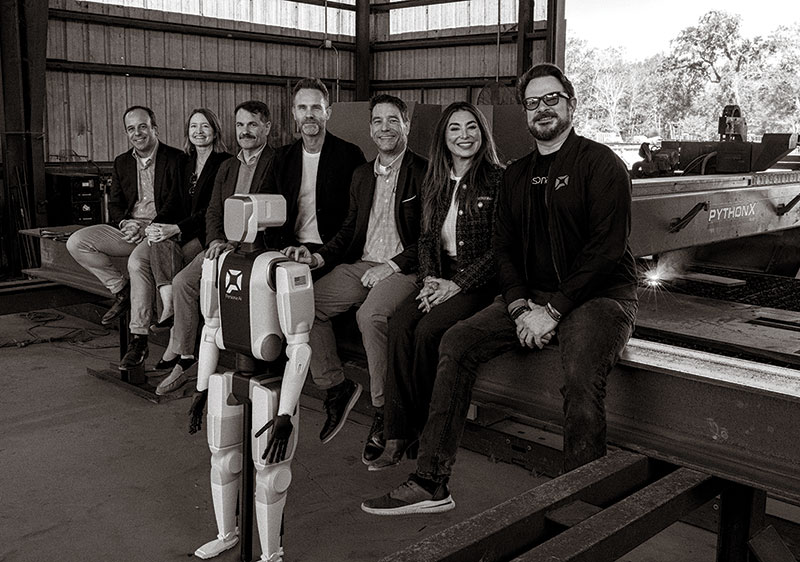
The robot that will be working at SSE is roughly 5 feet, 8 inches tall. It has two arms, two legs, advanced vision systems, and dexterous hands capable of operating the same tools human workers already use.
“A humanoid platform can navigate stairs, walk through existing facilities, operate hand tools, and move between different workstations without requiring facilities to be redesigned around automation,” explained a spokesperson of Persona AI, the Houston-based company that developed the robot.
“Rather than automating a single station, our objective is to create a flexible worker that can adapt to changing tasks and environments.”
Persona AI was founded in Houston in 2024 by Nicolaus Radford, a roboticist who spent 15 years as a principal investigator at NASA’s Dexterous Robotics Lab before founding and taking a subsea robotics company, Nauticus Robotics, public.
He built his team with the same pedigree: Chief Technology Officer Jerry Pratt previously held the same role at Figure AI, one of the most prominent humanoid robotics companies in the country.

The startup has raised $42 million in pre-seed funding and already has an agreement with HD Hyundai to deploy humanoids in South Korean shipyards.
What sets Persona AI apart from today’s crowded field of humanoid robotics startups, however, is where it’s pointed. Most competitors are chasing logistics warehouses and automotive assembly lines — environments that are already highly structured and relatively easy for robots to navigate.
Persona AI is going the other direction, into what the company calls “4D jobs”: work that is monotonous, dangerous and declining in available labor.
“Steel fabrication was already one of the industries we believed would benefit significantly from industrial humanoids,” explained Reichel. “What made Justin’s outreach exciting was that it came directly from an industry leader looking to help shape the future rather than simply evaluate new technology.”
While the robot has yet to arrive, the work of preparing for its arrival began months ago on SSE’s floor.
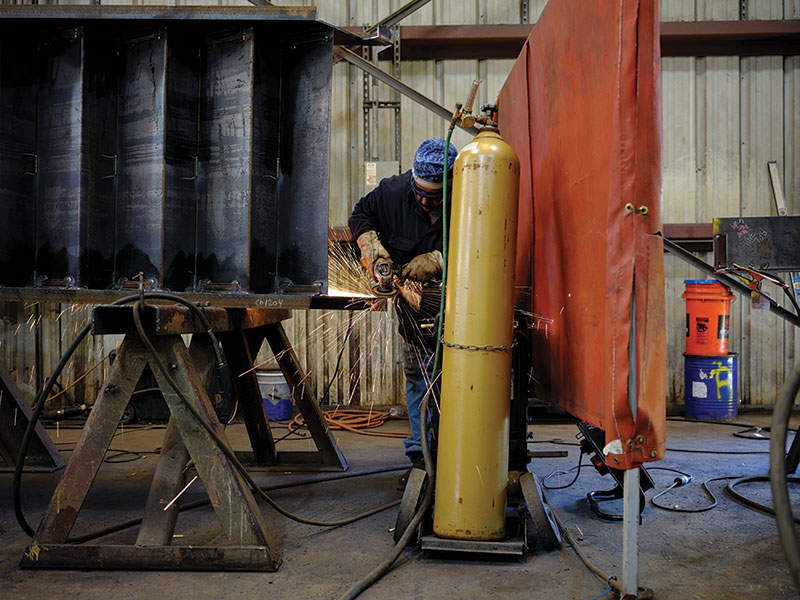
Cameras installed throughout the facility have been slowly capturing the rhythms of a working fabrication shop — from the way a welder positions his or her body to the way material handlers navigate around freshly cut beams. None of it is staged; it’s all real production, with real workers going about their unedited daily routines.
That footage feeds directly into Persona AI’s simulation environment, where engineers use the data to build digital replicas of SSE’s workflows and test robot behaviors before any physical attempt is made.
“By validating software in simulation first, we can iterate much faster while improving safety and reliability,” Reichel explained. “The sensors help us better understand real manufacturing workflows, workspaces and how industrial tasks are performed in production environments.”
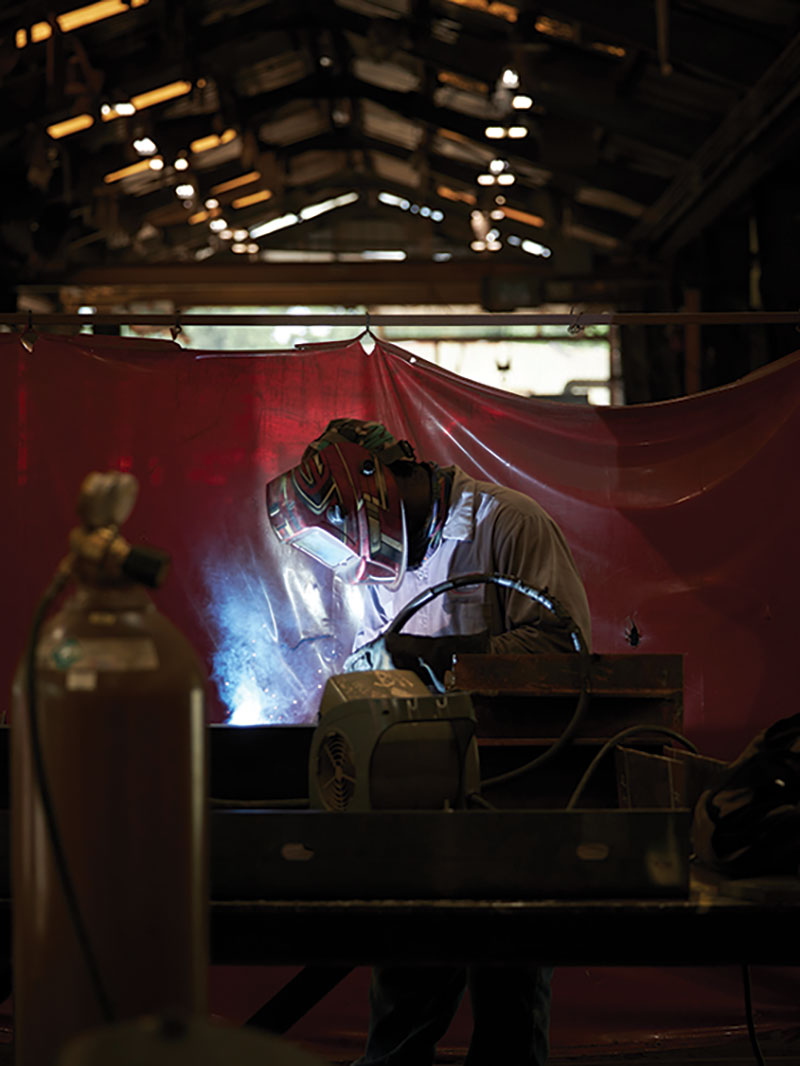
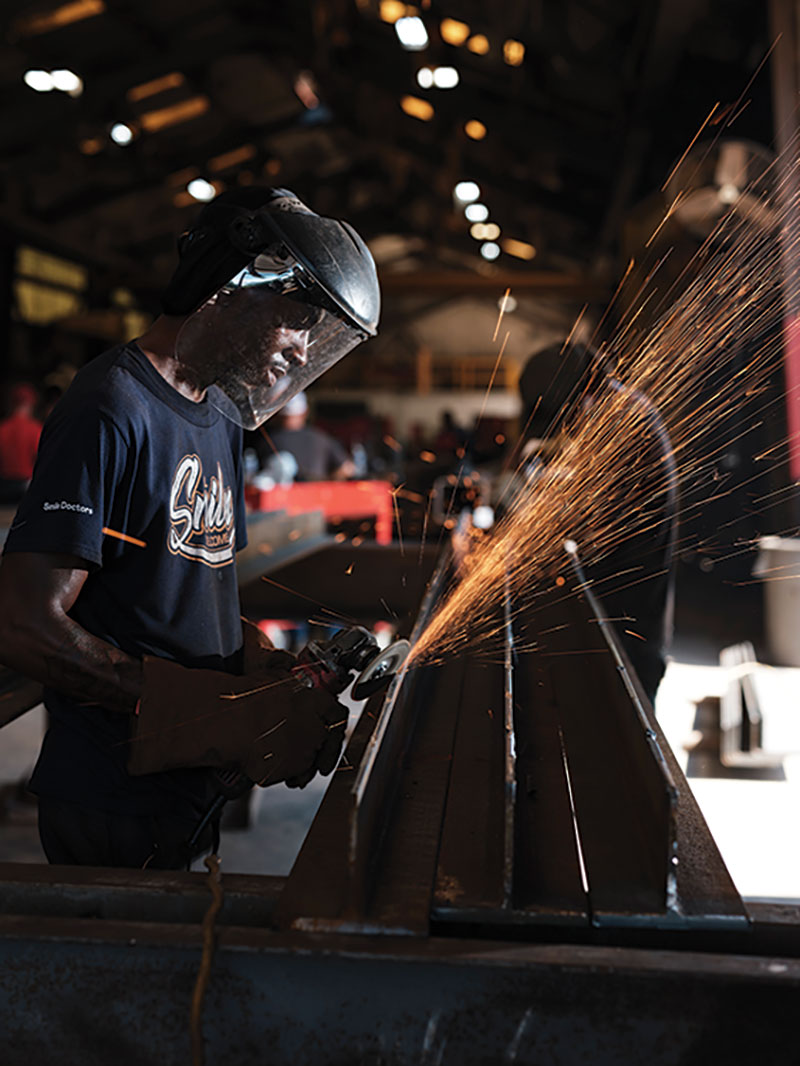
When the humanoid does arrive, its first assignment will be modest. Its initial task will be fillet welding — running welds along pre-fitted structural members. It’s the sort of repetitive, physically demanding work that Mindy Airhart said is both essential to fabrication and among the hardest positions to staff.
If that goes well, the scope will expand. Eventually, the robot may handle the full sequence.
All those involved emphasize that the project is experimental as early-stage technology will be stress-tested in a live environment for the first time. The robot has not yet welded anything at SSE, and the timeline to a fully operational humanoid on the shop floor involves several unknowns. SSE is essentially providing Persona AI with a training ground to develop proof of concept.
What Does a Humanoid Robot Cost?
For a small, family-owned business, the question of how to afford a humanoid robot is not a small one. A technology this new and this early in its commercial life doesn’t come with a standard price tag, and a capital expenditure of that size could carry risk.
Persona AI’s answer to that problem is a business model designed to lower the barrier to entry. Under what the company calls its robotics-as-a-service (RaaS) model, SSE doesn’t purchase the robot outright.
Instead, they access its capabilities through an ongoing service relationship that covers deployment, software updates, maintenance and operational support. The exact commercial terms haven’t been disclosed, but the structure is built around the idea that a manufacturer using robots shouldn’t have to absorb the full financial risk of unproven technology up front.
“Our vision is to make advanced robotics accessible without requiring customers to make large upfront capital investments,” Reichel said. “The goal is to simplify adoption while allowing customers to scale automation over time.”
This is an important distinction, as it’s the difference between a bet-the-company capital decision and a service relationship that can be adjusted over time. It also means that if the robot underperforms, SSE isn’t holding a multi-million-dollar piece of equipment it can’t use.
The pricing model reflects something interesting about the future of industrial robotics: The goal is to sell results, not the robots themselves.
Fighting the Fears
With robots, fear is understandable. Automation has always carried with it the specter of displacement, and humanoid robots make that anxiety visceral in a new, somewhat unnerving way.
Mindy and Justin Airhart have heard these protests before, and their answer has always been the same.
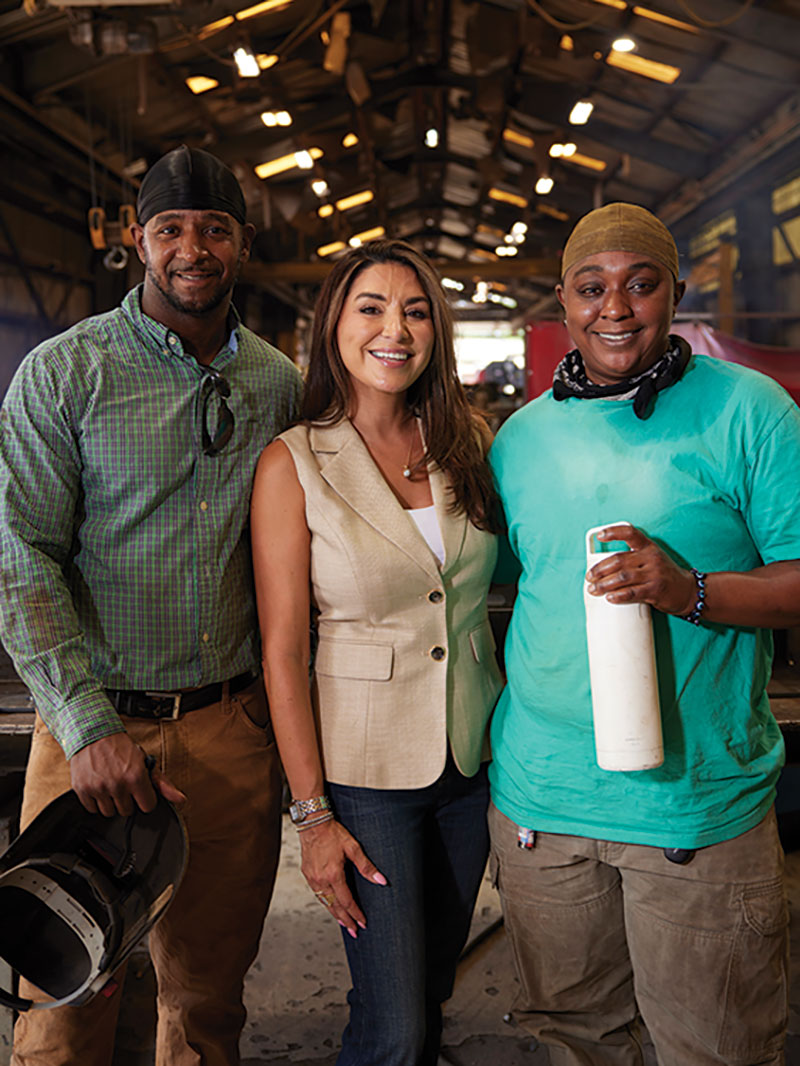
“The anxiousness goes away when you start to understand how beneficial it can be,” Justin Airhart said. “People don’t like change, but this change is coming. There’s no getting away from it.”
Some data suggest that the public’s anxiety may be pointed in the wrong direction as manufacturing currently has more positions than it can fill. According to a 2024 study by Deloitte and The Manufacturing Institute, American manufacturers could need as many as 3.8 million new workers between now and 2033. If current labor shortages persist, roughly 1.9 million of those positions could go unfilled.
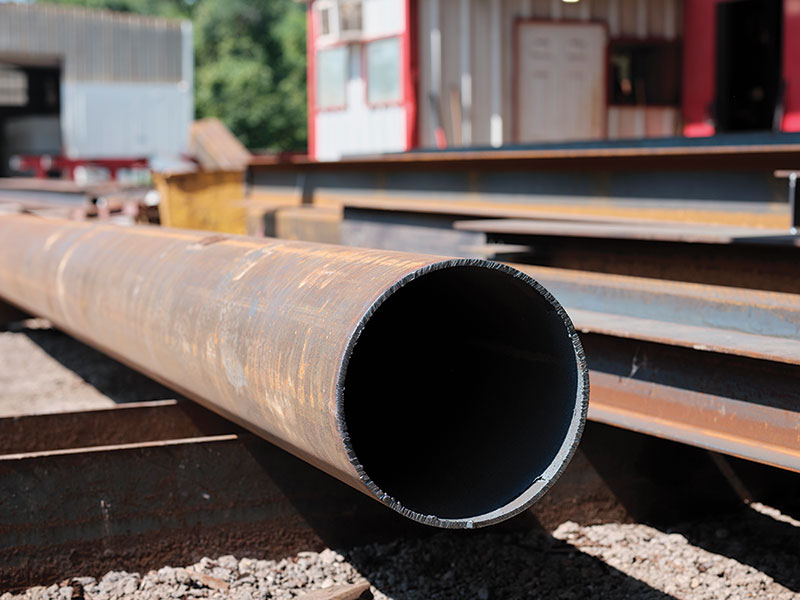
The American Welding Society projects the industry will need to fill approximately 82,500 welding positions every year between 2025 and 2029. The average age of a working welder in the United States is roughly 55. For every five experienced welders who retire, only about two are entering the field to replace them.
Justin Airhart said he didn’t need a research report to tell him any of this.
“Hiring and labor is one of the hardest things to get, keep, train and retain,” he said. “This eliminates all those factors in one.”
The robot, in other words, isn’t coming for anyone’s current job; It’s coming for jobs that the company already can’t fill. As those positions are handled by the humanoid, the workers already on the floor move into new roles that require their expertise without the physical toll of grueling tasks.
“Any sort of new training or new job titles that come out of this, our employees will be the first ones to receive that training,” explained Mindy Airhart. “It’s just going to give them new opportunities as far as their careers.”
Exactly what those jobs look like, however, cannot be said with certainty.
“We’re not really sure because this is going to be the cutting edge of the humanoid experience,” said Justin Airhart.
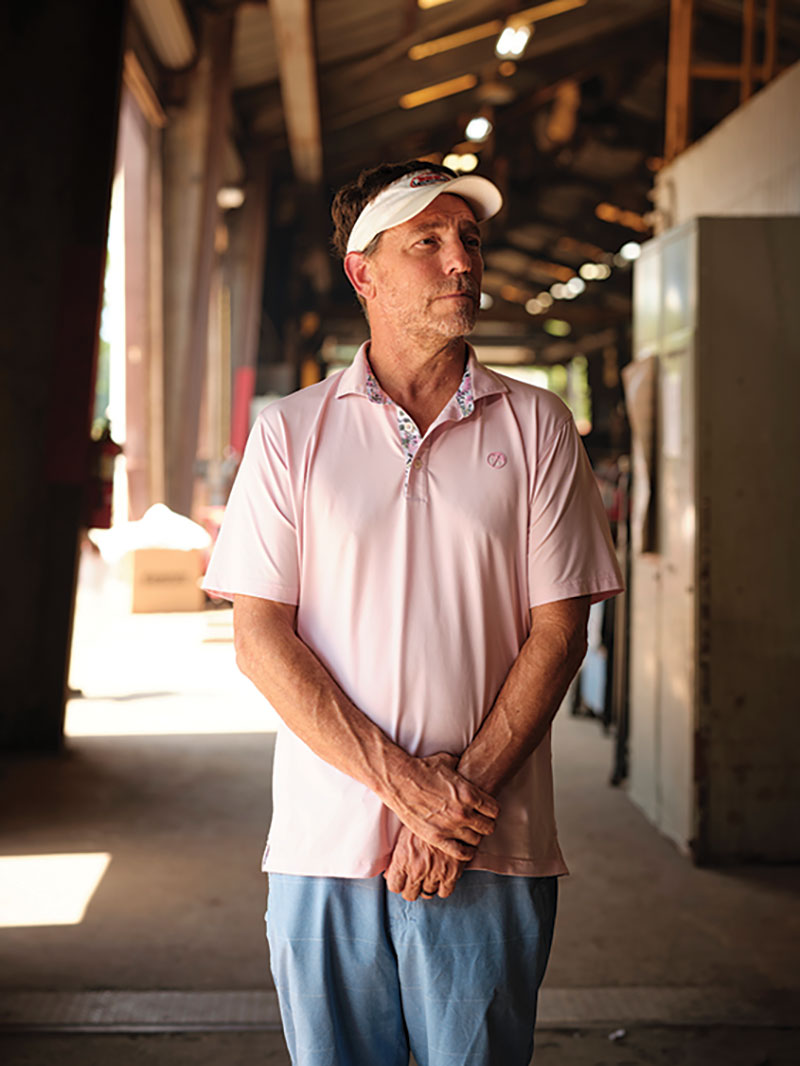
But SSE’s workers, he said, are excited rather than anxious. After all, they’ll be among the first people in the country to figure out what working alongside a humanoid actually means in practice.
What This Means for Louisiana
What happens at SSE this fall won’t stay in St. Bernard Parish. At least, that’s the bet Louisiana is making.
The pilot is facilitated by Louisiana Innovation, known as LA.IO, a division of Louisiana Economic Development launched in February 2025 with a $50 million growth fund and a mandate to position the state as a hub for high-growth, technology-enabled industry.
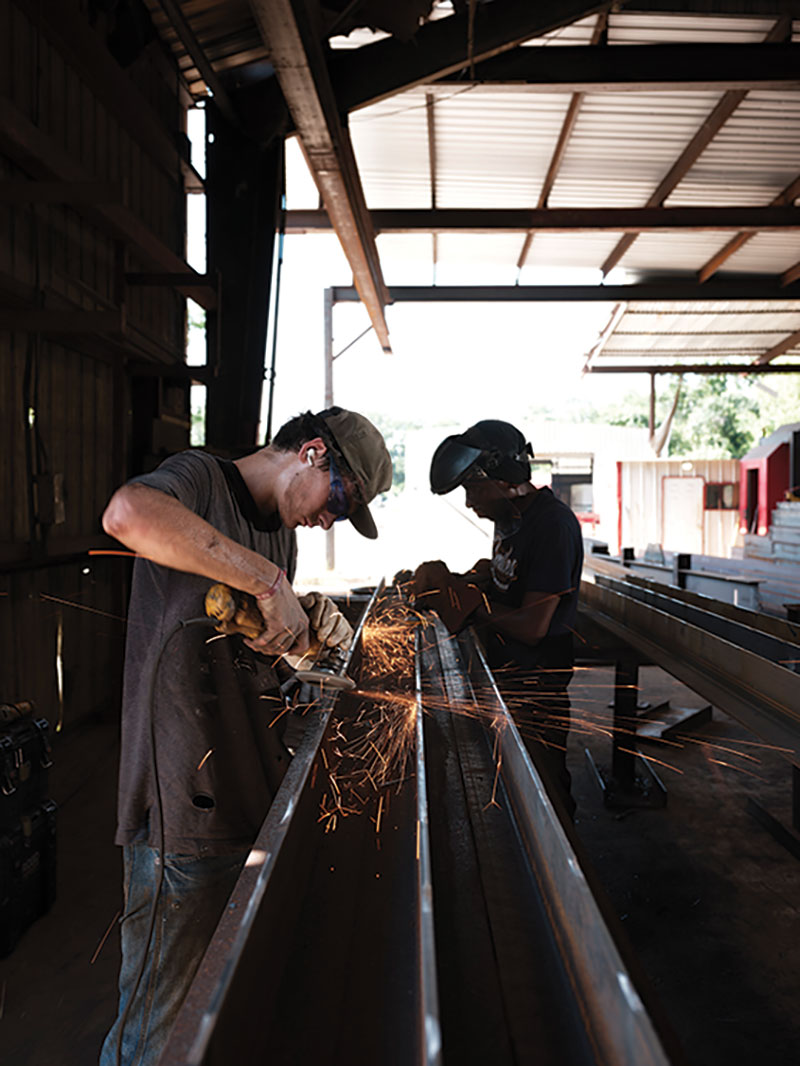
The SSE pilot fits squarely into their strategy: use Louisiana’s existing industrial backbone as a proving ground for technology that the rest of the country is still figuring out how to deploy.
Margot McNeely, who leads communications at LA.IO, sees the SSE partnership as a template for future innovation.
“SSE Steel does the kind of work Louisiana was built on — heavy fabrication, structural steel, the backbone of our industrial economy,” she said. “That combination of established industrial muscle and frontier technology is exactly where Louisiana will lead.”
The stakes extend well beyond one fabrication shop. McNeely recently visited several shipyards across South Louisiana and came back with a clear read on where the industry is heading.
“Every single one of them was looking at some form of automation,” she said, to meet demand that they currently can’t keep up with.
Reichel of Persona AI shares McNeely’s optimism for the state’s future.
“Louisiana has an opportunity to become a leader in advanced manufacturing and industrial robotics,” he said. “The state’s strength in energy, fabrication, shipbuilding and heavy industry creates an ideal environment for developing and deploying next-generation industrial automation.”
Whether that vision materializes depends on what happens when the robot shows up.
But Mindy Airhart — who grew up watching her parents build something from nothing in St. Bernard Parish and has kept that growth going — isn’t waiting around to find out how the industry feels about it.
“I really think that they are just going to be an absolute benefit to everyone on the shop floor,” she proclaimed, “and improve their lives on a daily basis.”